


As manufacturers update budgets and standard costs for the coming year, finance teams may turn to AI to accelerate labor and overhead rate calculations, product costing, and profitability analysis. AI can quickly process data, perform the calculations, and present the results in a clean, organized format, but it may not recognize when the underlying data is incomplete or inappropriate. Producing an answer is not the same as building the right model.
Manufacturing costs depend on decisions about how expenses should be classified and allocated. This means that the costliest mistakes may not come from bad arithmetic. Instead, they may come from accepting a methodology that doesn’t accurately reflect the operation.
Beware of an answer that looks ready to use
We recently tested this by providing an AI tool with data for five manufacturing workcenters, including labor hours, machine hours, square footage, and approximately $1.1 million in labor and overhead expenses. The tool was asked to calculate labor and overhead rates for each workcenter.
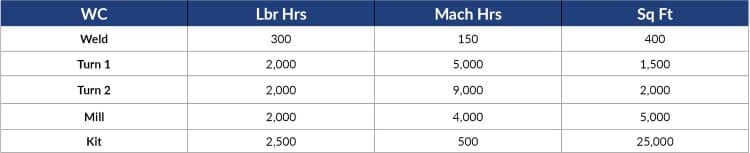
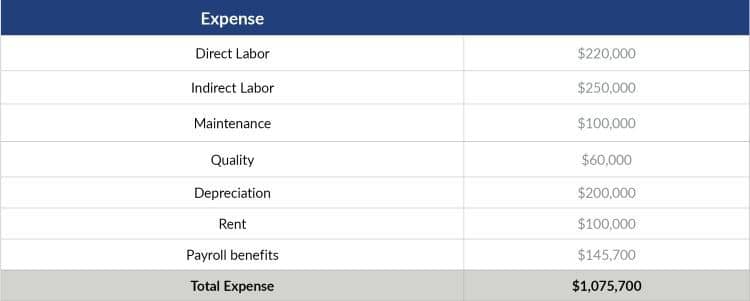
Its response appeared ready-to-use. It selected allocation methods, calculated rates, and explained its reasoning.
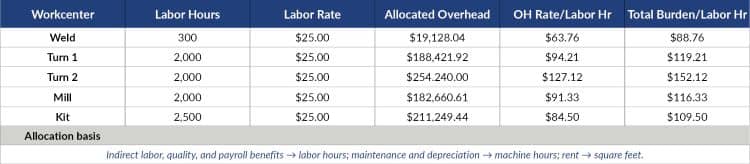
But the analysis also exposed several assumptions the data alone couldn’t validate:
- One workcenter showed roughly 9,000 machine hours. A year contains only 8,760 total hours. The figure could represent multiple machines or a problem with the source data, but the AI tool neither questioned it nor disclosed its assumptions.
- The model used labor hours to allocate overhead in machine-intensive workcenters. That may be appropriate, but it couldn’t establish if labor hours drove those costs or whether machine hours would better indicate how resources are consumed.
- Similar turning workcenters were treated separately. The analysis didn’t establish whether meaningful differences in equipment, processes, or cost structure justified separate rates or whether some workcenters should be combined.
- Benefits and payroll taxes associated with direct labor were classified as overhead. Those costs belong with the direct labor rate rather than in general overhead.
- Maintenance and depreciation were allocated without equipment-level context. The model used averages without knowing whether equipment values, ages, maintenance needs, or replacement economics were comparable.
- The model didn’t address unused capacity. Spreading the same fixed costs over fewer productive hours raises the fully absorbed overhead rate without necessarily changing what it takes to make a part. Using that higher rate to raise prices or turn away work can further reduce volume and push the rate higher still.
Flawed assumptions can become costly business decisions
If loaded into an ERP system, rates based on those unresolved assumptions could flow through inventory valuations, quotes, and profitability reporting before anyone recognizes that the underlying methodology needs further scrutiny. What begins as a questionable allocation decision can then shape much larger decisions about pricing, production, and investment.
The consequences aren’t limited to inaccurate reporting. For example, a manufacturer moving operations to Mexico in pursuit of lower labor costs might expect meaningful savings, particularly for products with relatively little direct labor. But for a highly automated operation, those savings could be offset by unanticipated expenses.
If the analysis supporting the move doesn’t adequately reflect the economics of an equipment-intensive operation or the additional logistical expenses required to serve customers from the new location, any additional freight costs, compounded by rising diesel prices, could quickly consume any savings from lower labor costs. A decision that looks reasonable on paper could then prove difficult and costly to reverse.
AI could complete that analysis quickly, producing scenarios, comparisons, and a polished explanation. But without experienced review, it could also make a flawed conclusion appear more credible.
Would your organization know when to challenge the model?
A costing methodology rarely announces itself as the problem. Instead, the warning signs tend to appear elsewhere in the business:
- Quoted margins don’t become actual margins.
- Completed cost reduction projects are difficult to find in the financial results.
- Sales teams consistently question whether rates are too high.
- Operations teams question why disruptive or difficult-to-produce products appear to be the most profitable.
When those patterns persist, the costing methodology itself may be worth another look.
Costing still requires judgment
AI can make experienced practitioners more efficient. It can accelerate calculations, test scenarios, and help organize large amounts of cost data, particularly when the data is sound and the operation is relatively straightforward.
But determining whether the resulting model is appropriate requires a different kind of analysis. Which costs belong together? What drives them? Should similar workcenters share a rate? How should unused capacity be treated? How much detail improves the model, and when does additional complexity make it harder to maintain?
Those decisions require an understanding of the equipment, processes, products, and operating conditions behind the numbers. That context, when provided by finance, costing, and operational teams, can improve the AI analysis. In other words: A useful costing model isn’t finished when the calculations are complete.
Challenge the model before trusting it
The costing model is one of the most influential yet least challenged inputs into management decisions. AI can make costing analysis faster, but speed is useful only when the methodology deserves confidence. The greater risk is a model that looks reasonable enough to influence pricing, profitability, inventory, or investment decisions before its underlying assumptions have been adequately challenged.
AI shouldn’t be kept out of the costing process. It should be used to make the work more efficient while leaving the methodological decisions to those who understand how the operation actually works.


