

First, the bottom line: Consumers are still spending
- The consumer story hasn’t changed materially in recent months — the results are strong but come with teeth clenched in frustration at the continued upward pressure on prices. Offsetting the frustration caused by the erosion of purchasing power, layoffs remain low and wage growth is solid. Still, hiring has slowed, but not to the point that unemployment is showing any signs of rising. That “no hire, no fire” environment continues to underpin incomes and, in turn, consumption — even if the collective consumer mood remains negative.
- The strength of consumption, not sentiment, continues to provide a solid foundation under growth as the economy heads toward year-end. Even so, the combination of strong consumption, solid labor conditions, and inflation that appears to be reaccelerating should create a greater sense of urgency for the Federal Reserve.
- For a Fed that’s retooling its communication style and reevaluating other aspects of policy execution, maintaining credibility remains critical. The Warsh Fed has been consistently firm in restating its commitment to price stability. The December meeting will provide a test of that commitment, both through its rate decision and accompanying message.
By the numbers: A softer headline masks better underlying results
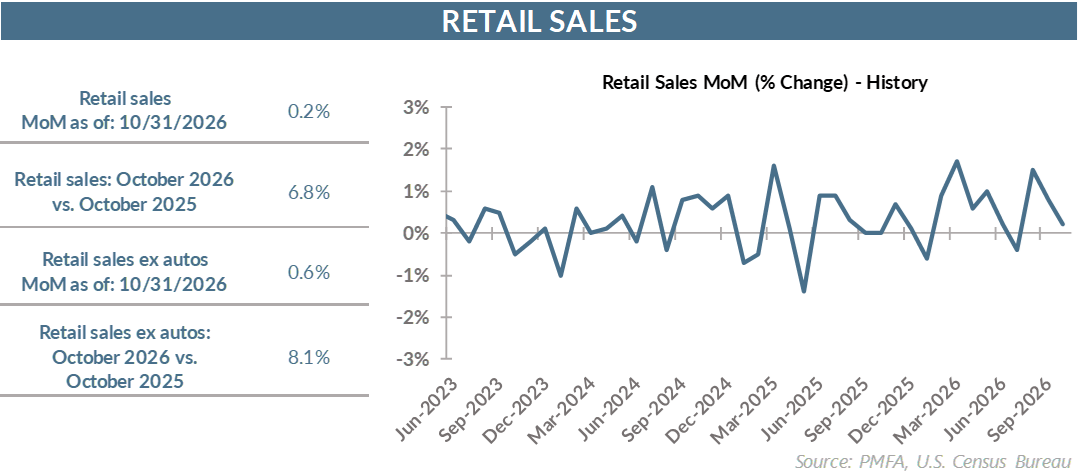
- Retail sales rose 0.2% in October following September's 0.8% gain and were 6.8% higher than a year ago.
- Autos were a notable drag, falling 1.6%. Excluding autos, sales rose a healthier 0.6%, while sales excluding autos and gasoline increased 0.5%. Higher borrowing rates are one contributing factor, as consumers have been similarly resistant to borrowing for other large purchases. On top of rising interest rates, higher prices for both homes and cars — the latter of which have been notably impacted by import tariffs — exacerbate the affordability challenge.
- Online sales remained strong, rising 1.2% for the month and 11.8% over the past year, an encouraging sign heading into the critical holiday season. The ease of online shopping will also likely mitigate foot traffic at bricks-and-mortar retailers in the coming weeks.
Economy set up for strong end to the year; Fed set up for another hike
- The lingering disconnect between consumer sentiment and spending isn’t particularly difficult to reconcile. Households have good reason to be frustrated by the extended period of elevated inflation and the cumulative erosion of purchasing power, but most workers still have jobs, and wages are still rising. That’s been enough to keep the consumer engine running at a surprisingly solid clip.
- There may also be some early holiday spending embedded in October’s numbers. Early retailer promotions have continued to pull holiday purchases forward, suggesting that Black Friday no longer carries the weight that it once did as consumers increasingly take advantage of deals well ahead of the traditional start to the holiday shopping season.
- With more retailers accelerating “Black Friday deals” to get a jump on competitors, the traditional holiday shopping season is increasingly pulling forward the end-of-year retail season into October. The National Retail Federation October Retail Monitor specifically described early holiday promotions as having “pulled demand forward,” while other studies have indicated that some consumers planned to start shopping earlier this year.
- Whether it’s a desire to relieve pressure during a busy time of year or the need to be more aggressive in the hunt for deals to make their dollars go further, the stretching out of the holiday shopping season could dampen sales data a bit over the next few months.
- The broad takeaway remains constructive. Consumer spending remains on solid footing, the labor market isn’t showing significant cracks, and underlying economic momentum appears strong heading into year-end. That points toward another solid quarter for growth, but with inflation reaccelerating, strong growth increasingly looks like a double-edged sword.
- What’s good for the economy may not be good news for the Fed, and the various pieces of the data puzzle increasingly point to the need for further Fed tightening. A resilient consumer, limited layoffs, and renewed inflation pressure provide little indication that current interest rates are sufficiently restrictive to meaningfully cool demand, particularly in a time frame that would be consistent with the Fed’s stated resolve to bring inflation under control.
- Barring a meaningful deterioration in other data between now and the December FOMC meeting, the case for another rate hike in December continues to strengthen.
Past performance does not guarantee future results. All investments include risk and have the potential for loss as well as gain
Data sources for peer group comparisons, returns, and standard statistical data are provided by the sources referenced and are based on data obtained from recognized statistical services or other sources believed to be reliable. However, some or all of the information has not been verified prior to the analysis, and we do not make any representations as to its accuracy or completeness. Any analysis nonfactual in nature constitutes only current opinions, which are subject to change. Benchmarks or indices are included for information purposes only to reflect the current market environment; no index is a directly tradable investment. There may be instances when consultant opinions regarding any fundamental or quantitative analysis may not agree.
Plante Moran Financial Advisors (PMFA) publishes this update to convey general information about market conditions and not for the purpose of providing investment advice. Investment in any of the companies or sectors mentioned herein may not be appropriate for you. You should consult a representative from PMFA for investment advice regarding your own situation.


